
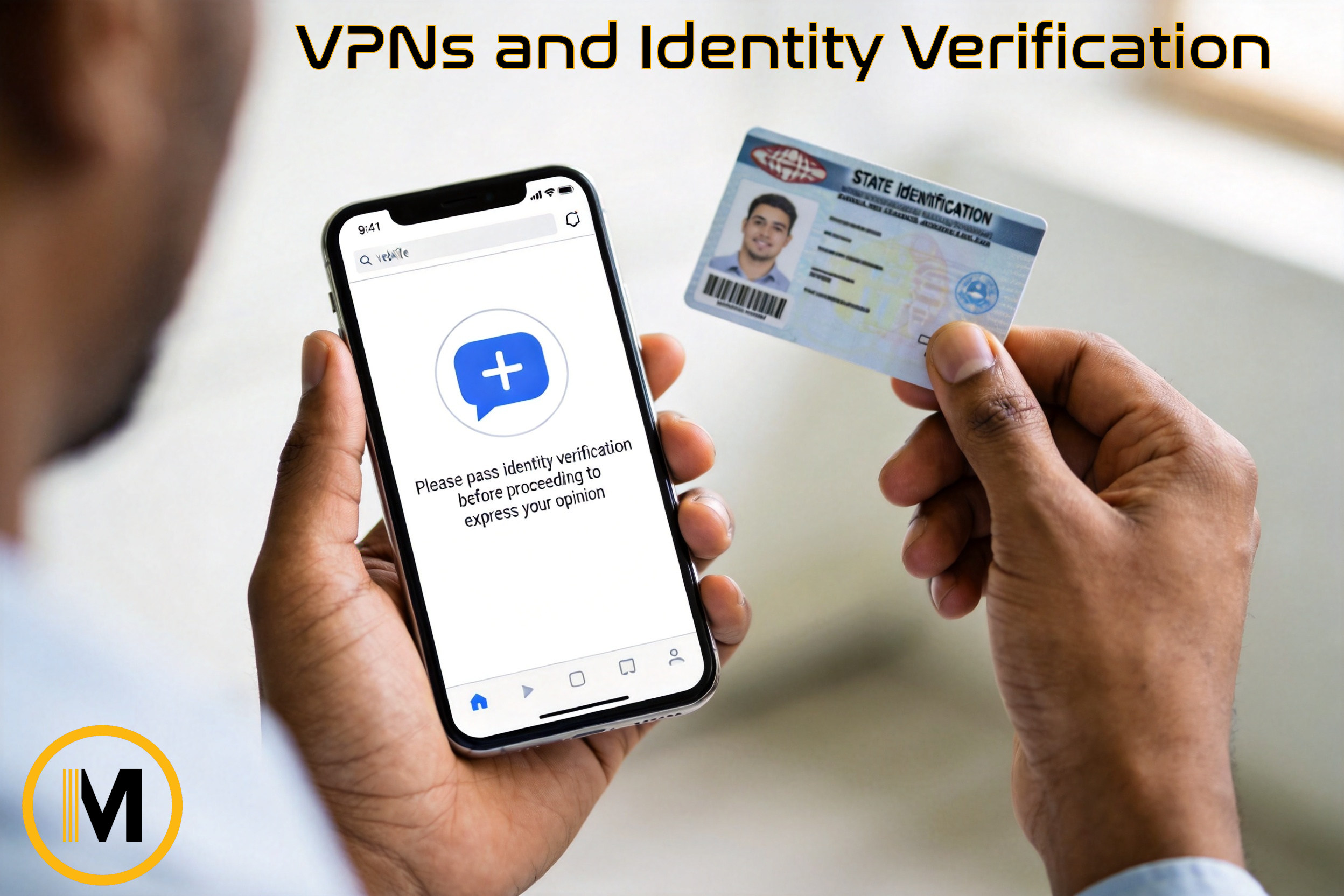
Identity Verification
Starting May 6th, the first such indirect ban barring citizens from using VPNs goes into effect in the state of Utah and may affect businesses which operate VPNs (Tom’s Hardware). While governments use the cloak of wanting to protect children, the scope of such draconian measures has far reaching consequences for people’s personal data and privacy online.
Age verification AKA Identity verification is the ludicrous implementation being adopted simultaneously by Western government’s worldwide ushering in a Chinaesque like surveillance panopticon. Such violations of user’s privacy is seen as a safeguard to protecting children from the harm that can come from the internet. While we don’t deny there are things we wish our children not to be exposed to, it is ultimately the individual parent’s responsibility to protect their children from unwanted circumstances.
Identity verification creates extreme privacy concerns. For one, people’s data will be collected and exposed by third-parties and ultimately sold by data brokers. This creates identity profiles of people using the internet. Furthermore, the internet should not be age-gated as it is a wealth of valuable information for all ages alike. Even more so, identity verification is the first step to Digital IDs which will eliminate online anonymity as we know it.
The Founding Fathers of the United States had the intrinsic human right to be able to express their dissenting opinions of The Crown by writing anonymous newspaper articles prior to the American Revolution for fear of persecution from the King’s state had they been forced to reveal their true identities. The same thing is seen today. Many people are waking up to the atrocities committed by their government and expressing a dissenting opinion which ultimately the end goal of deanonymizing internet users is to suppress dissent and qual individual expression.
VPNs as a way to circumvent ID verification laws
VPNs are directly affected by law’s like what we are seeing come into effect in Utah. Not only do we provide security for our users by protecting their location online, it also protects agains threat actor’s who may see you IP address and instantiate an attack against your home internet gaining access to your private affairs conducted online in your home. These are very real and common occurences. But, aside from privacy and security, another reputable use of VPNs are circumventing measures imposed by the state.
Many states are enacting laws age-gating and segregating users on the internet. In order to ensure the internet stays a neutral and free environment companies like Meile dVPN give the ability for users to “relocate” their digital presence into a jurisdiction that believes in a free internet and does not ban or bar users from accessing the internet as a whole.
One subtle point to note, is that Meile dVPN is not your traditional VPN; we are a decentralized VPN. Technically we only provide access to a network of community ran servers and don’t actually provide the VPN services. We are a tool to access a distributed and open service provided by hundreds of various users throughout the world. This allows us to skirt passed laws restricting VPN companies from providing online privacy and geo-relocation for their users.
VPNs are great tools for users. In our opinion, no internet user should be online without a basic level of security, such as a VPN. We provide this security and privacy through our application suite. We also believe in a “zero-data retention” policy and encourage our users to pay with cryptocurrencies – primarily privacy coins. It is why we built the world’s largest privacy coin accepting dVPN. We have integrated Monero, Bitcoin Lightning, Zano, Firo (with Instant settlement), Pirate Chain, and many other privacy coin payments directly within the app.
The less we know about our users the less liability we take on and the more secure and private our users can feel and be when using our tools. To read more, check out the Sentinel Website – which is the decentralized blockchain network that allows us to provide access to a worldwide distributed privacy service.
